

The Portland EcoFilm Festival’s
Global Ecological Cinema Podcast
Episode Seven: WOMAN IN THE DUNES & Kōbō Abe
Featured Guest: Dr. Timothy Iles | Release Date: May 21, 2026
Contains important plot points about the film and some Kōbō Abe literature
AUDIO
Listen on Apple Podcasts | Listen on Spotify | Listen on Deezer | Listen on Youtube
Please remember to share, subscribe, and leave us a five-star review! ★★★★★
TRANSCRIPTS | TRANSCRIPCIONES
English (Coming Soon)| Español (Próximamente)
Kōbō Abe wrote WOMAN IN THE DUNES beginning in about 1960. It was published as a novel in 1962 to international acclaim, establishing him as a major writer. Kōbō Abe’s primary cinematic collaborator, Hiroshi Teshigahara, brought Abe’s own adaptation of the novel to cinemas two years later.
WOMAN IN THE DUNES tells the tale of a self-absorbed entomologist named Niki Jumpei who travels from Tokyo to a remote oceanside desert. He’s there to search for rare tiger beetles in the hopes that he can gain acclaim by pinning his own name to an undiscovered version of them. After missing his bus back to the city, he’s tricked by villagers who imprison Niki in a deep sand pit with a mysterious woman who has been living in an expectedly rustic house down there for quite some time.
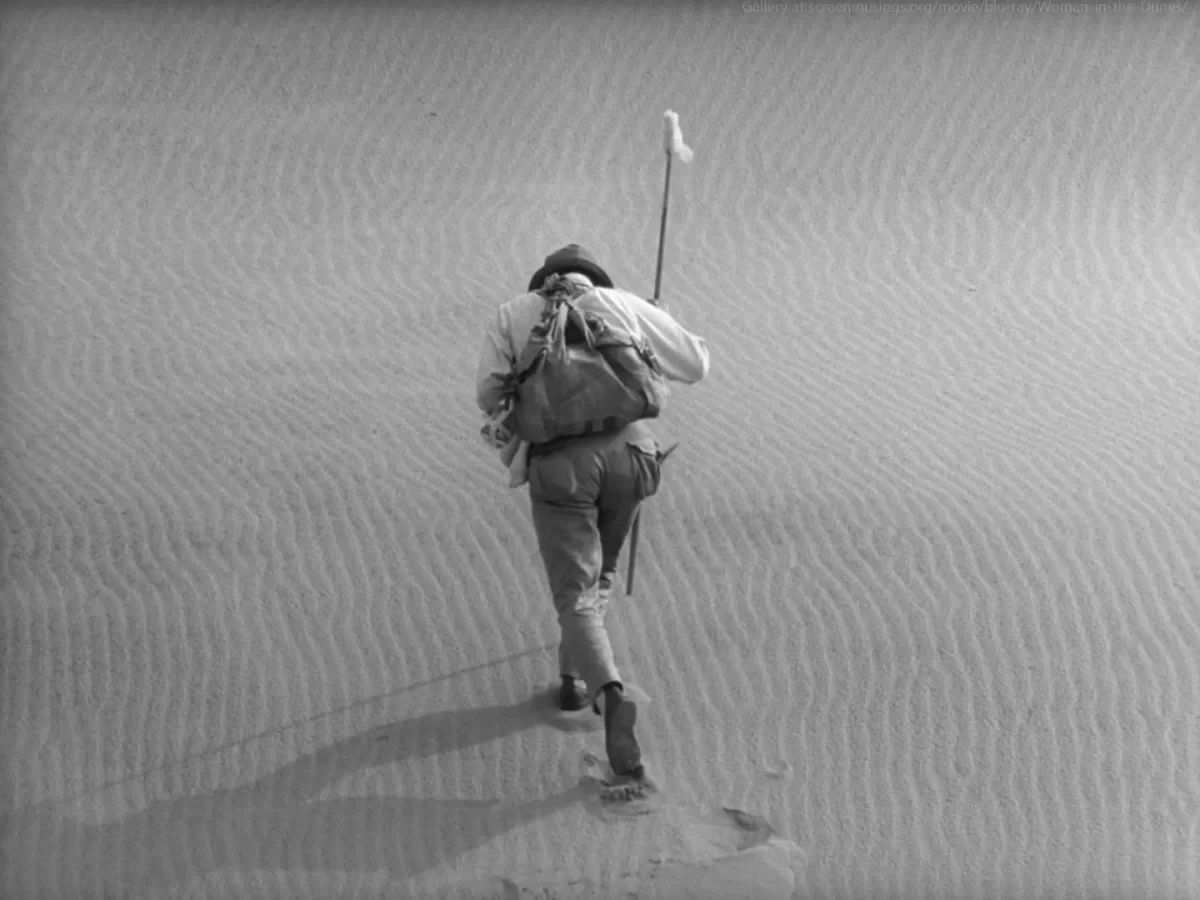
Still from the film WOMAN IN THE DUNES
Beyond winning major awards, including several Oscar nominations, upon its release, the film version of WOMAN IN THE DUNES is renowned as an arthouse masterpiece of the Japanese New Wave.
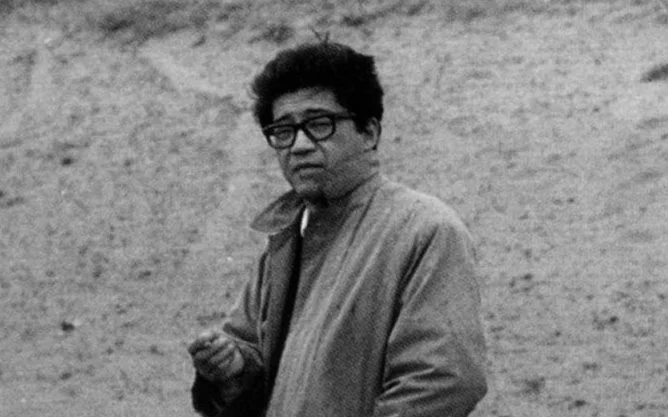
Kōbō Abe
Kōbō Abe’s literary qualities are often associated with existentialism, surrealism, alienation, and absurdity. While all of these are appropriate to some extent, his expansive ecological imagination is present throughout his work. And while it hasn’t gone completely ignored, like many things ecological in the fractured world that Abe critiqued, it has been under-explored despite its singular mystique.
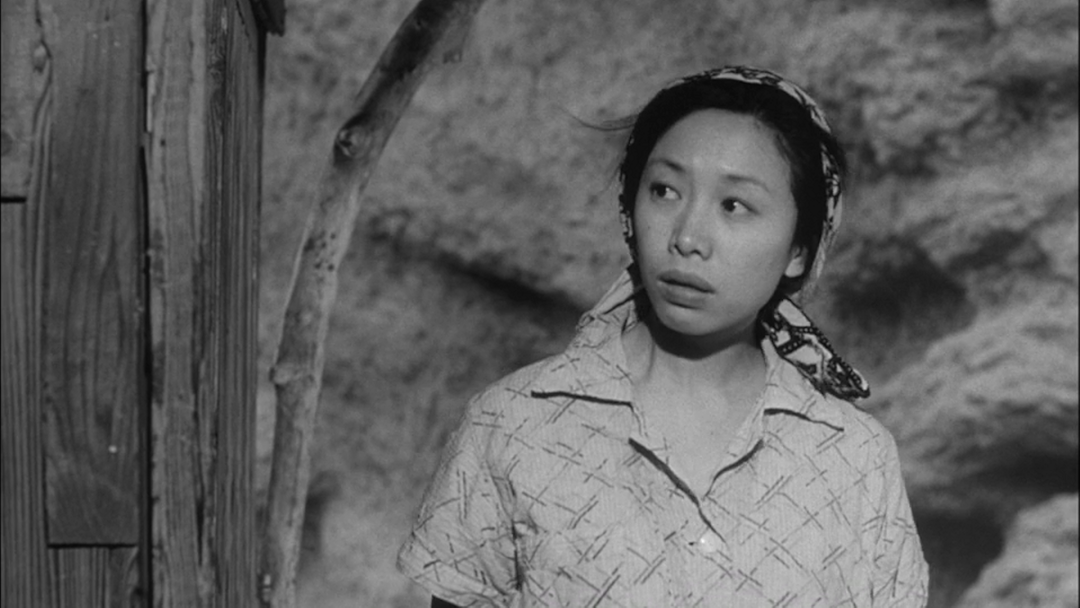
Still from the film WOMAN IN THE DUNES
This is why we selected WOMAN IN THE DUNES for inclusion in our expansive ecological imagination series, which frames an ongoing exploration and motivation to do what the title suggests: expand our individual and collective imagination about ecological possibilities, questions, inspirations, solutions, and beyond.
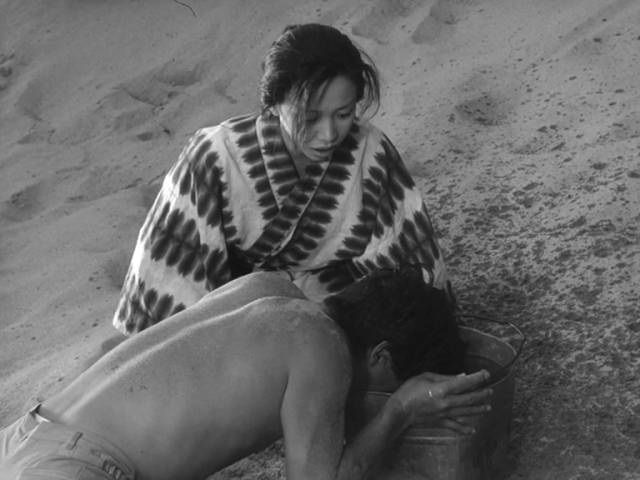
Still from the film WOMAN IN THE DUNES
To help us delve into the ecology of WOMAN IN THE DUNES and Kōbō Abe beyond that novel and film, we turned to one of the foremost experts and scholars on Kōbō Abe: Dr. Timothy Iles. Dr. Iles has been learning, teaching, and writing about Abe and his collaboration with Hiroshi Teshigahara for decades.
We discuss themes of community, metamorphosis, adaptation, and identity in the Abe’s work, as well as what they have to teach humanity about the world we live in and some of the problems we face. We also discuss the characters that haunt WOMAN IN THE DUNES and how the narrative brims with allegorical possibility.

Ecological Film (and book) Recommendations
During this episode, Dr. Iles recommends the following films in relation to the work of Abe and his constant collaborator, Hiroshi Teshigahara:
THE FACE OF ANOTHER (1952 | Dir. Hiroshi Teshigahara)
IKIRU (1966 | Dir. Akira Kurosawa)
YAJI AND KITA: THE MIDNIGHT PILGRIMS (2005 | Dir. Kankurō Kudō)
GHOST IN THE SHELL (1995 | Dir. Mamoru Oshii)
SPIRITED AWAY (2001 | Hayao Miyazaki)
METROPOLIS (2001) | Dir. Rintaro)
All of these films are available to rent at the world’s best video store, Movie Madness, in Portland, Oregon.
Dr. Iles also mentions the following writings by Kōbō Abe:
INTER ICE AGE 4 (novel)
Abe’s proto cli-fi opus about a future-predicting supercomputer, set against the backdrop of a world facing rising sea levels from melting ice caps
THE BOX MAN (novel)
A man abandons his identity to live anonymously inside a cardboard box on the streets of Tokyo, observing the world through a peephole.
THE RED COCOON (short story)
A homeless, alienated man wanders the streets searching for a home. And then…
SECRET RENDEZVOUS (novel)
The bizarrely erotic and comic adventures of a man searching for his missing wife in a mysteriously vast underground hospital.
…and more!
Our theme music is from the song “Earth Worship” by the amazing band, Rubblebucket.
Our podcast is hosted, edited, and produced by Rozzell Medina.
The Portland EcoFilm Festival is a signature program of the Hollywood Theatre, Portland's premier modern-historic movie palace.
The views, thoughts, and opinions expressed in this program are solely those of the speakers and do not necessarily reflect the views or policies of Film Forever Northwest or its affiliates.